Radha Bhimani Pentland
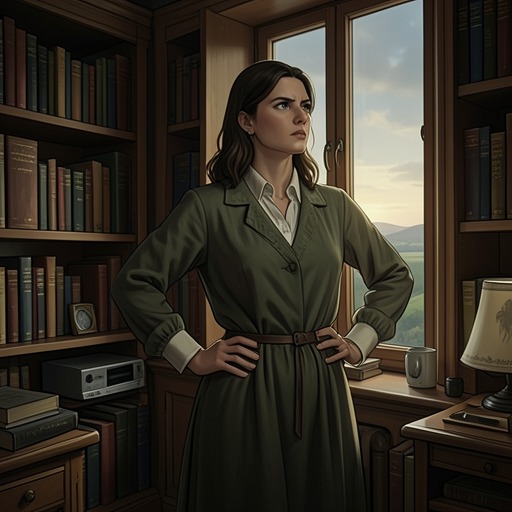
Just DesertsRadha Bhimani Pentland’s life links the English country-house story to a much wider history of forced migration, imperial conflict, and survival. An Indian woman who had endured abduction, confinement, and a pirate attack, she became Lady Pentland, a trusted mentor to Elizabeth Bennet, and the force behind a refuge for women at Grenadine Reef. When Elizabeth first encounters her in 1804, Radha is the rarely seen mistress of the neighbouring estate, not yet a person Elizabeth has met.
Identity and Background
Radha was born Radha Bhimani in Kutch, in western India. Her mother died in childbirth, and her paternal grandmother and aunts raised her. Her father, a minor district official, later remarried; Radha never lived with his new household and had several half-siblings she had never met. Her childhood was repeatedly displaced by political and military upheaval. Her Hindu family fled when the Muslim Mughals conquered the district, returned after their defeat, and faced further disruption with the arrival of the Christian British. The moves and dangers left Radha with fragmented memories and difficulty placing childhood events in their correct order.
When she was about a year older than Elizabeth was at their first meeting, Radha was kidnapped for sale into slavery. She was rescued before she could be sold, off the coast of the Arabian Peninsula, by a Spanish ship carrying priests. They kept her safe during the voyage and taught her rudimentary Spanish, but that rescue led to another form of coercion: after landing in Spain, she was forced into a nunnery outside Cadiz. She remained cloistered there for six years, without control over the course of her life.
At twenty-one, Radha was selected for a mission to South America, again without being given a choice. In the spring of 1772, she and twenty-nine other members of the order sailed from Cadiz toward Cartagena on the Spanish Main. The voyage carried her from religious confinement into another period of danger: pirates captured the ship, setting in motion the rescue and injuries that would shape her later life.
Capture, Injury, and Rescue
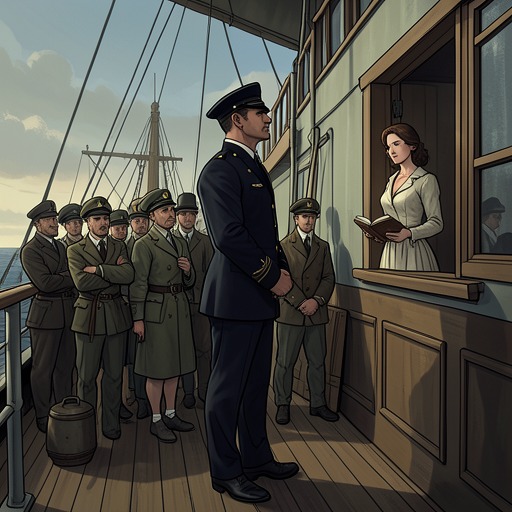
During the voyage toward Cartagena, pirates seized the ship. In the fighting, the pirate captain dragged Radha onto the deck and ran his sword through her womb. As she fell with severe pain, she saw Sir David slash the captain through the neck. Radha later understood that she had survived the attack, but at the time she believed her last sight had been of her own killer receiving immediate punishment. Her wound was nearly always fatal, and she received the last rites while struggling with infection. The other surviving members of the religious order were put ashore under a flag of neutrality and continued on their way; Radha was too ill to be moved and was left behind.
Sir David brought her to his large house in Bridgetown, Barbados, where his housekeeper and a nurse helped care for her. She nearly died twice even with that attention, but eventually fought off the infection. By the time she recovered, eleven weeks had passed since the ship was captured. She had been a Hindu child from India, kidnapped and rescued at sea, taught some Spanish, compelled to live as a nun, and then abandoned by the rest of her order after a pirate attack. In Barbados, the house of a British naval officer became the first place in this long sequence where she could recover under sustained personal care.
For propriety, Radha moved to the home of a widow known to Sir David, who then began courting her. She chose to tell him about what had happened during the four days before the rescue. His response—that her past did not alter his feelings—struck Elizabeth as exceptional; Radha’s account made clear that she could not take such acceptance for granted. Once it became certain she would survive, she had faced barbed remarks and heard that her death would have been preferable. She had been blamed and shunned for having survived crimes committed against her, as though her supposed fault had been living too near the coast in India. That response exposed the social punishment attached to women’s victimization, in sharp contrast to Sir David’s care and acceptance.
The treatment Radha received became the last straw for Sir David, who had already been unsure about continuing his naval career. He resigned his commission, and the couple returned to Britain. Radha willingly, though only superficially, converted to the Church of Scotland; they married in Sir David’s hometown outside Edinburgh. After their wedding trip they moved to London, where they learned of the Hertfordshire estate they would purchase. They settled there and lived together for thirty-two years. Her conversion, marriage, and move were successive decisions within a life in which earlier authorities had repeatedly chosen her destination for her; the account distinguishes the coercion of her confinement and mission from her stated willingness to marry Sir David and convert.
Refuge, Mentorship, and Legacy
From the first year of their residence at Grenadine Reef, Radha and Sir David provided a refuge for women mistreated by men. Most who came were servants or daughters of tenants and tradesmen. They could stay to recover and, when needed, address the consequences of what had happened to them. Radha described her own approach as listening: a woman might need to unburden herself, speak about her experience, or express anger at the unfairness of the world, and Radha would not judge her. The refuge made private care a sustained part of the estate’s life, extending the protection Radha herself had once received from Sir David to women with fewer means and less security.
Her influence on Elizabeth Bennet grew through both conversation and example. Elizabeth first met Radha in 1804, after years of hearing about the neighbouring estate but never encountering its mistress. Radha welcomed her, and later recalled Elizabeth’s direct, artless request to meet and know her. Over the years Elizabeth visited Grenadine Reef regularly, learning from Radha’s account of survival and from the practical work of caring for others. When Elizabeth later reflected on what it meant to be a lady, she credited Radha and Madeline Gardiner as two very different models whose lessons converged in love and the ordinary responsibilities of daily life. Radha’s quietness and limited participation in society did not diminish that authority: Elizabeth learned from her attention to women’s needs, as well as from the estate visits that helped make Elizabeth’s own work with tenants more effective.
Radha’s circumstances also shaped the material future of Grenadine Reef. She and Sir David had no children, and her injuries from the pirate attack had left her unable to bear them. Sir David’s wealth began with the treasure he recovered from a Spanish galleon wrecked on a reef in the Grenadine Islands; his share enabled the purchase of the estate. The couple lived quietly and with relative frugality, avoided the expense of frequent London seasons and elaborate entertaining, and invested their surplus income. Those accumulated resources later enlarged Grenadine Reef and supported the purchase of smaller estates. Their private life, their wealth, and the refuge were therefore connected: the estate’s resources grew through restraint and investment, while its household gave practical shelter to women in need.
Radha died suddenly in her sleep after an apoplexy. More than a month passed before Elizabeth returned to Grenadine Reef, where she stood in the silent chapel before Radha’s resting place, weeping. Elizabeth’s grief was profound, but Sir David’s loss was greater still; the change in him made plain that Radha had been the light of his life. Elizabeth had come not only to mourn but to give him the opportunity to talk, as Radha had once listened to her. After nearly three years of visits, he trusted Elizabeth enough to speak with her, while Mrs. Perkins remained in the drawing room, able to observe but not overhear.
The refuge’s work and Radha’s influence continued beyond her death. The final thousand acres of the original Grenadine Reef estate surrounded its dower house; Elizabeth and Fitzwilliam Darcy later built St. Vincent Lodge on that land, and the family stayed there when visiting the estate. When their daughter Helena inherited Grenadine Reef, Edward and Madeline Gardiner were to move into the lodge, while Helena’s cousin Annabel, already deeply involved in running the dower house, was expected to inherit the St. Vincent estate. Radha’s legacy thus endured not only in Elizabeth’s understanding of compassionate responsibility but in an estate whose arrangements preserved a place for women’s refuge and care.
Narrative Role and Significance
Radha’s first appearance gives her story a quiet, deliberate threshold. Elizabeth knows the tenants and families of Longbourn from accompanying Jane on visits since childhood, and the estate’s familiar fields leave her feeling safe; then, by a summer brook, she notices a horse drinking on the opposite bank before its rider appears. The rider is Radha, a rarely seen Indian woman in Britain, and Elizabeth recognizes the mistress of the neighbouring estate from what she has heard. She remembers her manners, curtsies with her bonnet in her hand, and greets Radha; Radha, whose face had frozen at Elizabeth’s approach, returns the curtsy. The meeting begins not with a formal introduction but with a brief mutual adjustment across the stream, opening a relationship that will change Elizabeth’s understanding of care and responsibility.
Radha also governs how her past reaches Elizabeth. Before recounting her history, she says she will tell parts of it but leave out what is too dark for a young listener, alluding to what she withholds rather than making herself responsible for shattering Elizabeth’s innocence. That choice marks her not merely as the subject of suffering but as its interpreter: she decides what to disclose, when, and in what measure. The account gives her history a scale beyond the country-house setting, linking Kutch, the Arabian Peninsula, Spain, the Caribbean, and Britain through forced displacement, religious institutions, naval rescue, and resettlement. Her later authority rests not on social visibility—she and Sir David seldom moved in society—but on the hard-won knowledge she turns into attentive listening, practical shelter, and a model Elizabeth carries forward.